Rev-AR
RevAR represents an idea for an augmented reality app designed to simplify the purchasing procedure for pre-owned vehicles
ROLE
Year
Type
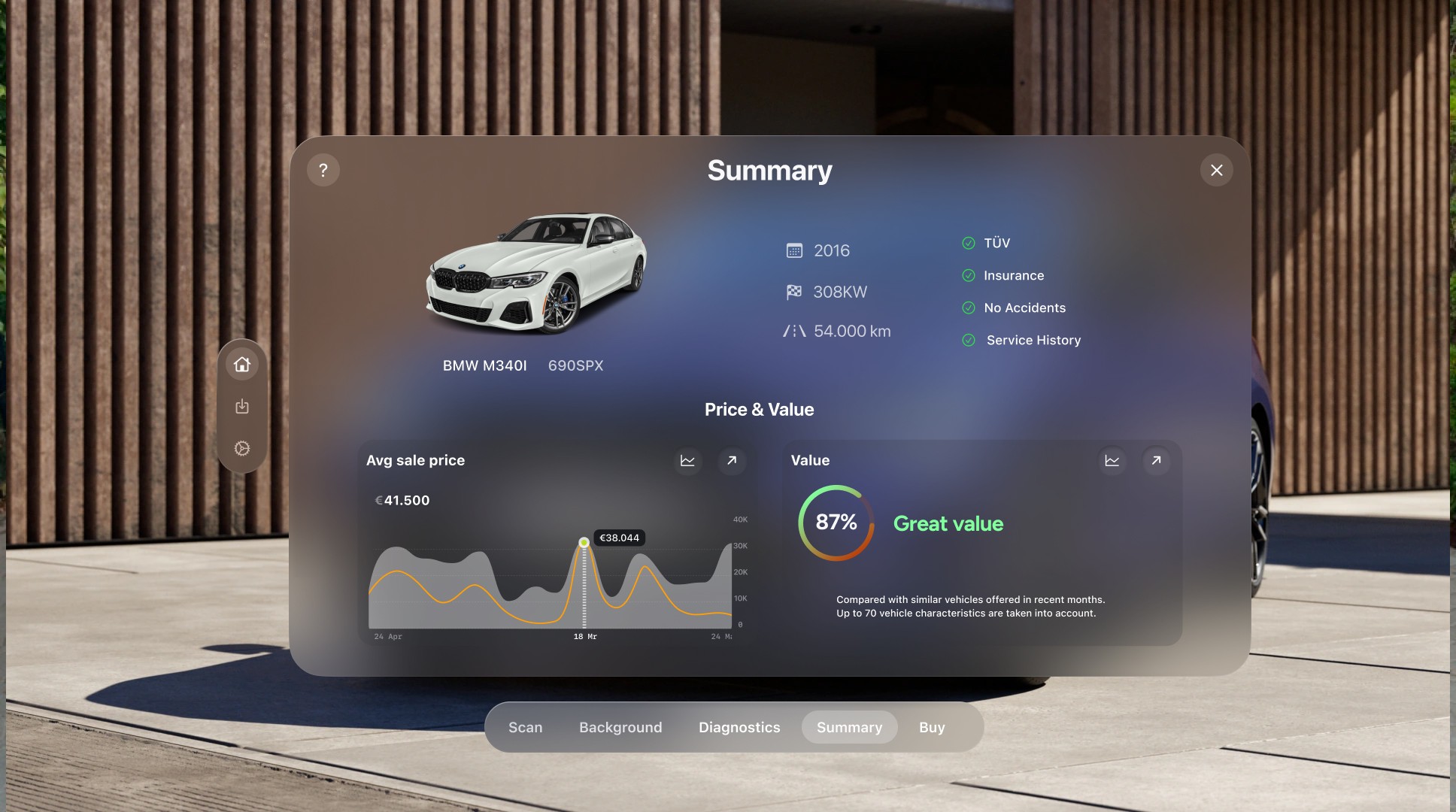
Rev-AR explores how augmented reality could reduce uncertainty in used car purchases by overlaying contextual information directly onto physical vehicles. The concept focuses on guiding inexperienced buyers through inspection, history checks, and decision-making in a spatial interface.
This project was intentionally designed for Apple Vision Pro to explore interaction patterns, depth hierarchy, and information density in a mixed-reality environment.
Why this problem space
Buying a used vehicle involves fragmented information, expert knowledge gaps, and asymmetric risk between buyer and seller. Most existing tools separate research from the physical inspection moment.
This concept asks:
What if critical context appeared exactly where the user needs it - on the car itself?
Design focus
This project was not about visual polish or technical feasibility.
The focus areas were:
Spatial information layering without overwhelming the user
Anchoring digital content to real-world objects
Reducing cognitive load during physical inspection
Designing flows for glanceable, in-context decisions


Process (condensed by design)
Studied existing XR application patterns and visionOS interaction models
Mapped a high-level user flow from arrival to purchase decision
Designed interfaces using Apple’s visionOS design system
Prototyped key moments rather than full end-to-end coverage
This was a conceptual exploration, not a production-ready system.
Outcome
The result is a speculative XR flow that demonstrates how spatial interfaces could augment trust, clarity, and confidence in high-risk purchasing scenarios.
If developed further, the next step would be testing interaction comfort and spatial hierarchy using real hardware.